Showing posts with label #dynabodyfitness. Show all posts

Sunday, January 15, 2023

Fitness Classes start January 17th & 19th, 2023

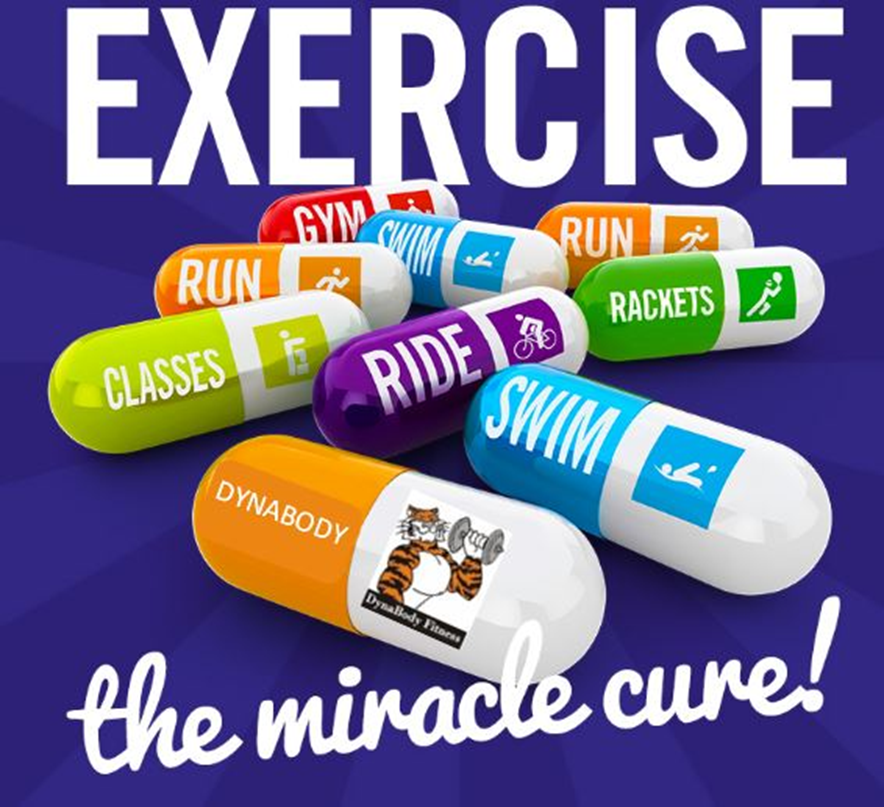
Reap the benefits of exercise – nature’s best medicine! No matter what your age, fitness level or ability, there is something out there for you.  Fight that boredom and kick that will power in full year.


Sign up for  Dynabody Total Fitness in-person classes


Tuesdays    Bannatyne School – starting January 17th.  6:30 to 7:30 pm

or

Thursdays  Strathmillan School – starting January 19th 6:30 to 7:30pm


To Register, contact the St. James-Assiniboia School Division Continuing Education office 204-832-9637  or email me directly at dynabody@gmail.com.


Sunday, October 18, 2020

Cancer is up to 90% preventable

 Here’s a reality check, cancer is not caused by bad luck; it has everything to do with the toxicity of the world we live in.  Scientific journals Nature and Pharmaceutical Research have both published large studies finding that cancer is up to 90% preventable!   

Only 10% of cases are due to genetic defects, whereas 90% are due to environmental and lifestyle factors.

Physical inactivity, Obesity and Alcohol remain three of the biggest risk factors for cancer.

Learn evidence-based cancer prevention and treatment strategies when you attend a complimentary, free online event:  Click on the following Link to Register

https://anticancerrevolution2.com/?idev_id=24711


Sunday, August 30, 2020

RESISTANCE TRAINING QUIZ

How's your fitness knowledge?  10 questions on strength training - see how you do!

1.Will I get bulky muscles if I strength train? 

Men have 10-30 times more testosterone than women.  *

Along with a string workout regimen and nutrition, Muscle Building Factors include (1) Testosterone (2) Illegal Drugs (3) Genetics.

2. Is it easier for some people to build muscle & get stronger? 

Yes – the outer bounds of personal fitness are genetically determined.  But realty, you should focus on personal improvements rather than comparisons.

3. Do some weight equipment develop long-lean muscles? 

When it comes to equipment, No - your muscles don’t know the difference.

Muscle Development contributions include (1) Genetics and what your program consists of: (2)Resistance and (3)Intensity/Duration.

4. How long before I feel stronger & see changes in working out?

 It really depends on your commitment and intensity.  Initial strength improvements happen in the first 4-6 weeks .  You can wake up 50% of muscle that was previously inactive.

5. What happens to muscles when I get stronger? 

You can get stronger without getting bigger.

75-80% of strength gains come from nerves being able to rally dormant muscle fibers to contract.

20-25% come from your muscles getting bigger (hypertrophy).

6. Do Muscles Turn to Fat if I stop strength training? 

No. Fat looks like thin-walled honeycomb & muscle like bundles of straw.  An athlete that quits training, the muscles shrink (atrophied from disuse) & if they continue to eat & not exercise they will gain weight.

 7. Does Strength Training Spot Reduce areas? 

No Spot reduction is not possible.  You can however influence muscle definition by (1) Losing Fat and (2) Strength training.

 8. Should I get in shape before I start lifting weights?  

No.  Lifting weights is non-impact & increased muscle gains help to burn calories, lose weight & increase metabolism.

 9. Should  Woman’s Strength Program Differ from a Man?  

No, although everyone is different, it really just depends on your fitness goals.

 10. Do I have to spend hours strength training to get results? 

No, 2-3 times per week for 30 minutes per workout is all you need. Hey, that's one of the main benefits of Dynabody Fitness workouts.   Intensity and commitment are the major factors in seeing results – both in the way you look and feel.


Monday, June 22, 2020

COMMON AB-TRAINING MISTAKES


As mentioned earlier,  no muscle group is more noticeable for men or woman than their abs.   

And, putting aside vanity, the “healthy at any side” movement and body shaming, the reality is losing Visceral Fat is one of the most important steps you can take to staying healthy for life.

No matter what your goal when it comes to working your mid-section, there are a number of mistakes you should be aware of. So if you want results avoid these common ab-training mistakes;

  Mistake #1: Too Many Reps

Your abdominals are like any other muscle in your body.  They can be overworked. Doing endless ab work will not reduce the size of your waistline. 

Doing endless situps and crunches will NOT create a smaller waist or flatter stomach.  They are useful for your hip flexors and trunk flexion – not your abdominals…..

 Mistake #2: Drawing In Instead Of Bracing Your Abs

Don’t suck in your gut, push it out. Tighten or tense your abs and push out your belly button.  When you’re bracing your core, only your lower abdominals should be in play.  This creates a natural belt or girdle that stabilizes and protects the spine when you contract your ab muscles. You will notice improved posture as well as a slight flattening and tightening of the area.

 When you suck in your stomach you lose stability and breathing is more difficult - as your rib cage becomes noticeable and your stomach hollows inwards.

 Mistake #3: Neglecting Other Core Muscles

You need to engage your core as a whole.  Core training strengthens and stretches key muscles of the spine and lower torso and provide a solid foundation for all other movement.  By using functional exercises that conditions the abdominal and back musculature which represents the key “coupling” link of the body that connects movements between upper & lower body.  Because this simulates daily life and sport demands, this is one area that I focus in my fitness classes.

 Mistake #4: Poor Eating Habits!

Finally, and most importantly – THINK NUTRITION - you must eat smart.  This is a must.  You have to lose body fat, not weight, in order to “see” your abs and this can only happen when you eat high quality nutrient dense foods. Eat lots of fruits and vegetables. Cut out milk, limit (or omit) wheat, dairy and meat. This will help you control your blood sugar levels, insulin levels, and energy levels. Insulin management will help you lose fat and prevent you from gaining fat.

 Make sure your drink enough water – this helps flush out waste products.

Don’t overeat – moderation is the key.

Limit or abstain from alcohol – it’s empty calories.