Showing posts with label aging. Show all posts

Sunday, February 2, 2020

LUNG POWER


When it comes to your physical well being, there are few things more important than “Lung Power”.  But without your awareness, you are probably losing lung capacity. They tend to shrink with age.

DID YOU KNOW THAT YOUR LUNGS SHRINK WITH AGE?
Sooner or later….
-    You get tired more quickly,
-    You have less strength and virility
-     You get colds and the flu more often,
-     You take longer to recover from illness.

Did you know?
-   At 20 – Your lungs stop growing and lung capacity has stabilized.
-   At 30 – your lungs start to decline.  The Alveoli (air sacs) that deliver 
     oxygen to your blood begin to die off.
-   At 35 – you lose 20 percent of your lung capacity.
-   By 50 – you lose 40 percent of your vital lung capacity. 
-   And, the decline continues for LIFE!

If you get the flu or pneumonia at age 40, you can usually shrug it off – because you have extra lung capacity to sustain yourself.  However, if you are older (65 years or more) and you catch the flu or pneumonia, you won’t have the reserve lung capacity to get over the sickness.  Normal everyday activity becomes harder to deal with when energy reserves are declining.  That is why the death rate is so much higher for seniors who get these respiratory diseases.

Here’s another shocker – Lack of Oxygen Reserves causes 50% of all Heart Attacks!

You CAN build your lungs back!

The process of moving air in and out of the lungs is called pulmonary (lung) ventilation.  Breathing is always important, and, doing it properly is most important during exercise.  During a workout (resistance training) do not hold your breath - exhale on exertion. By breathing properly you train your body to breathe more deeply and effectively.

Here are the main benefits to improved Lung Power:
-     improve your lung capacity and minimize the loss of lung volume.
-          focus on your lung’s elasticity
-          improve stamina to help you perform better in your sport
-          improve your posture and
-          improve the function of your diaphragm,  great if you love singing (even if you’re bad at it like me - lol)

Basically, bigger lungs supply your body with more oxygen and help to remove carbon dioxide. 

Here are a few simple Methods to build up your respiratory system:

Method 1: Diaphragmatic breathing
“Belly breathing,” which engages the diaphragm, is the natural way of breathing (not the chest). 
In a comfortable position, start slowly and inhale ever deeper until you are filling your lungs completely.  Maintain a steady rhythm and breathe in from your belly.  On the exhales, simply let the air go.    (I do this as part of my regular practice of the Wim Hof method)

Method 2: Pursed-lips breathing
Inhale slowly through your nose.  Breath out even slower through pursed lips.  Pursed-lips breathing slows your breathing down and keeps the airways open longer, improving the exchange of oxygen and carbon dioxide.

Proactive rather than Reactive
Prevention is the best medicine.  Keeping your lungs healthy is much more efficient than trying to repair them.  Here are some pointers to keep your lungs healthy;
  •           Stop smoking, and avoid secondhand smoke. or environmental irritants.
  •           Eat foods rich in antioxidants – this helps build organ tissue.
  •           Get the flu vaccine to help prevent lung infections and promote lung health.
  •           Avoid environmental irritants and improve indoor air quality.
  •           Exercise!  – it improves Lung Capacity.
Aerobic activities like running. skipping, or swimming give your heart and lungs the kind of workout they need to function efficiently.
   
HIIT -High Intensity Interval Training are great if you are strapped for time.

Muscle-strengthening activities like Weight-lifting, Resistance Training, Core training, Yoga or Pilates build core strength, improves your posture, and tone your breathing muscles.

By taking steps to preserve your “LUNG POWER” you can slow the natural decline and restore your lung capacity of your youth.  It’s never too late to start!

 References: 

Sunday, November 29, 2015

December Classes

There are 5 classes for this December 2015:

Tuesdays: December 1st and 8th at Bannatyne School

Thursdays:  December 3rd and 10th at Strathmillan School

Make up classes are to be held January 5, 2016 for the Tuesday class and January 7th for the Thursday Class.

NEW WINTER CLASSES START JANUARY 12th AND 14th, 2016!


Tuesday, September 15, 2015

LUNG POWER

When it comes to your physical well being, there are few things more important than “lung power”.
But without your awareness, you are probably losing lung capacity. They tend to shrink with age.

DID YOU KNOW THAT YOUR LUNGS SHRINK WITH AGE?
 
Sooner or later….
 - You get tired more quickly,
 - you have less strength and virility
 - you get colds and the flu more often,
 - it takes longer to recover from illness.

Did you know?
At 20 – Your lungs have stopped growing and lung capacity has stabilized.
At 30 – your lungs start to decline.  The Alveoli (air sacs) that deliver oxygen to your blood begin to die off.
At 35 – you lose 20 percent of your lung capacity.
By 50 – you lose 40 percent of your vital lung capacity.
AND THE DECLINE CONTINUES FOR LIFE

If you get the flu or pneumonia at age 40, you can usually shrug it off – because you have extra lung capacity to sustain yourself.

However, if you are older (65 years or more) and you catch the flu or pneumonia, you won’t have the reserve lung capacity to get over the sickness.  Normal everyday activity becomes harder to deal with when energy reserves are declining.

That is why the death rate is so much higher for seniors who get these respiratory diseases.

LACK OF OXYGEN RESERVES CAUSE 50% OF ALL HEART ATTACKS!

RESTORE YOUR LUNG CAPACITY OF YOUR YOUTH

Yes, You CAN build your lungs back.

Bigger lungs supply your body with more oxygen and help to remove carbon dioxide.  All it takes is a few simple steps to build up your respiratory system.

The best way to do it is simple: High intensity, short-interval workouts

The process of moving air in and out of the lungs is called pulmonary (lung) ventilation.  Breathing is always important during exercise.  Remember that during muscular conditioning (resistance training) do not hold your breath - exhale on exertion.

By implementing an adequate exercise program you will

-     improve your lung capacity and minimize the loss of lung volume.
-          focus on your lung’s elasticity
-          improve your posture and
-          improve the function of your diaphragm,

You can make this challenging exercise program more effective with a diet rich in protein, which helps to build organ tissue.


Finally, finish up your workout with some yoga or slow stretches, breathing through your abdomen (around your navel).

Thursday, June 11, 2015

The Blue Zone Lessons for more Good Years

I recently finished a book I recently finished a book -  The Blue Zones – 9 Lessons for Living Longer  - From the people who’ve lived the longest by Dan Buettner (1).  The book reveals the secrets of the world’s longest lived people Sardinia, Italy, Loma Linda, California; Nicoya, Costa Rica;  Ikaria, Greece;  and Okinawa, Japan.

The Power Nine covers the following life domains;
What to DO to optimize your lifestyle for a longer, healthier life;
How to THINK;
How to EAT;
And How to Build SOCIAL RELATIONSHIPS that support your good habits

Although the 9 Lessons are nothing new, it’s the combination of maintaining these common elements of  lifestyle, diet, and outlook that have led to an amazing quantity and quality of life.

THE POWER OF 9 LESSONS INCLUDE
1)    Move Naturally
2)    Hara Hachi Bu – Stop eating when 80% full
3)    Plant Slant – Eat Vegetables, Beans and avoid Red Meat.
4)    Drink Red Wine
5)    Have Purpose – “Why I wake up in the morning”
6)    Downshift – Take time to relieve Stress.
7)    Belong – Participate in a Spiritual Community
8)    Loved Ones First – Make family a priority
9)    Right Trivbe – Be surrounded by those who share Blue Zone Values

Rather than going through each of the nine lessons, I will just add a couple of points worth commenting on.  I do encourage you to read the book as it helps to give you a plan on living a longer life with a minimal amount of “disabled” years.

How do you add on more Good Years?

First, you have to change your mind and environment to help shape good habits.
Eating more vegetables, beans, nuts, fish, chicken, and less red meat. Stop the American Diet -  Eat your largest meal in the morning, next at lunch and a lighter meal at dinner.  And - know when to stop eating.

Make physical activity part of your day and not just a chore.   Most centenarians worked most of their lives – well into their 80’s, spending hours in their gardens or naturally walking for miles each day.

According to Dr.Robert Kane of the National Institute of Aging (1) you don’t exercise for the sake of exercising – try to make changes to your lifestyle.   

Ride a bike instead of driving. Walk to the store. Take the stairs instead of elevator. Participate in a group that promotes fitness – bootcamps, Zumba, running/walking clubs & DTF classes.  Print work at a Multi-function printer further from your desk.  Build that into your lifestyle.

As Dr. Kane states - the name of the game here is sustaining.  These things that we try-usually after some cataclysmic event has occurred, and we now want to ward off what seems to be the perceptible threat of dying-don’t hold up over the long haul. We find all sorts of reasons not to do it. (p.16)

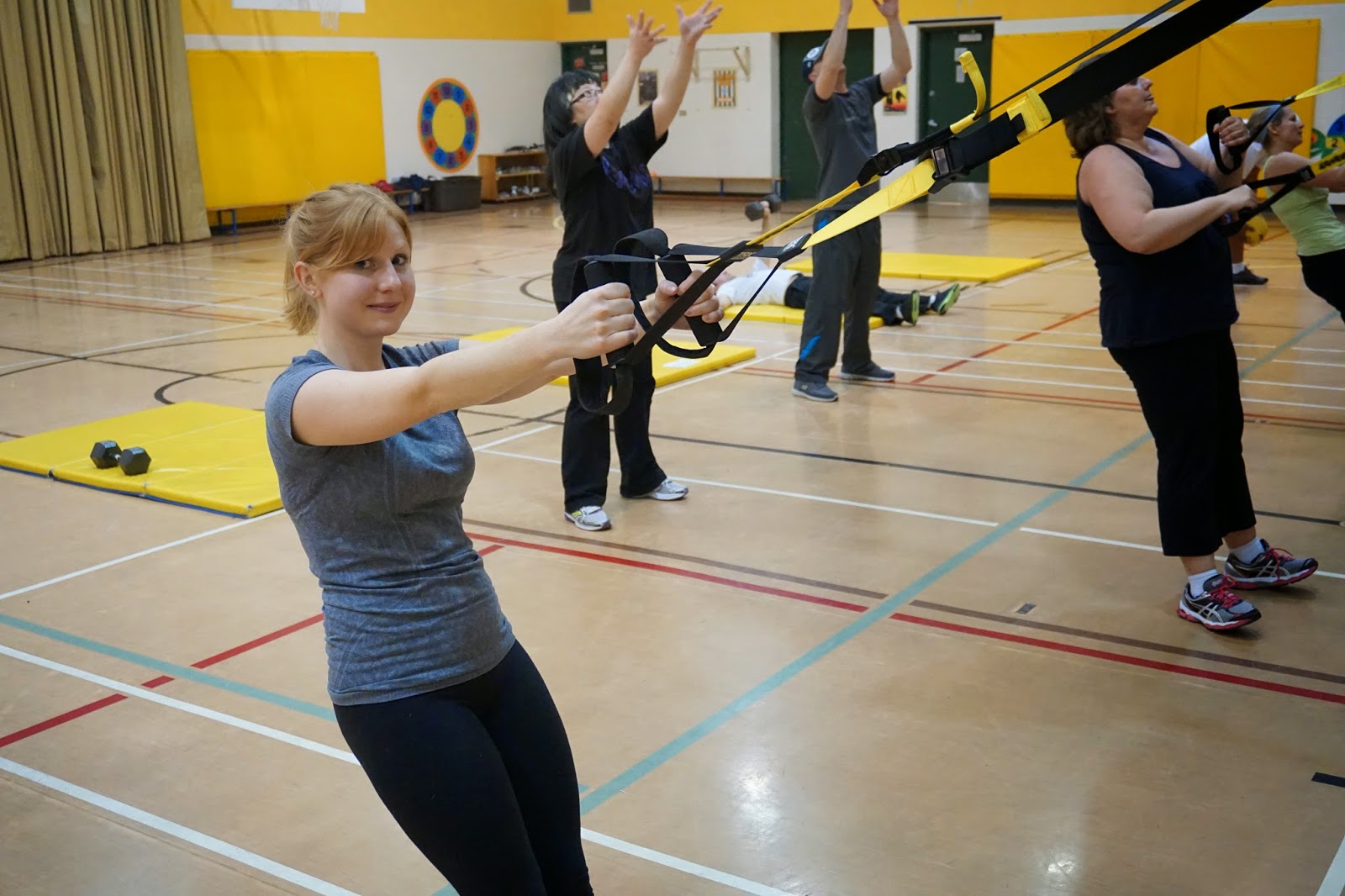
Exercise is needed in maintaining your health.  Swimming & skipping is good for cardiovascular exercise (heart health), Walking, standing and running helps to strengthen you bones and prevent osteoporosis,  Tai Chi and Yoga improves your balance and flexibility, Resistance Training helps strengthen and maintain muscle mass.  I recommend at least 2 or 3 days of medium to high intensity workouts focusing on strength – using weights, TRX suspension trainers or your bodyweight.  This not only burns calories but helps reverse the degenerative state and is important for relieving stress. 


Finally, identify your “Inner Circle”.  Ensure that Family comes first.  Surround yourself with positive people that have similar interests.  If you don’t have family, build your social network with neighbors, join a group, fitness class or club that peaks your interest, physically, spiritually and/or mentally.

Aging is not lost youth but a new stage of opportunity and strength.
Betty Friedan


(1) The Blue Zones – 9 Lessons for Living Longer  -From the people who’ve lived the longest , Dan Buettner. National Geographic Society  Copyright 2008 Washington, D.C. ISBN 978-1-4262-0948-2

Sunday, March 15, 2015

LIFE EXPECTANCY & HEALTHY LIFE EXPECTANCY

Current life expectancy for Canadians is 82.5 years, although not in the top 10 (11th) we are doing much better than our friends  South of the 49th parallel (ranked 36th) (1)…

According to Employment and Social Development Canada, men were expected to spend 88.0% (68.9 years) of their life in good health, compared with 85.8% (71.2 years) for women. Although women had higher life expectancy, men were expected to spend a higher proportion of their life in good health.

Wow!  In other words you can expect about 10 years of life in poor health.   Yikes!

Taking gender out of the equation, Chronic conditions are the main cause of lowered HALE (Health-Adjusted Life Expectancy.    Of that, Depression is a major cause.  In addition, obesity and stress continues to be on the rise. 

For the majority of people, they can improve their healthy life.

There are no magic pills, no short-cuts, no special diets, machines or routines that will result in “getting into shape”    Even if there was a magic pill – and you could afford it…there are much more benefits to exercise.  Besides adding strength and tone to the muscles, exercise works your heart and lungs.  An exercise pill won’t build your self-esteem and confidence you get from a good work-out.  Resistance and Aerobic exercise can improve your mood, add brain power, help your sex life, and change your body for the better.

Your food intake is also so very important.  -  Proper nutrition is 60% of the effort in building a healthy strong body.   Follow a properly balanced eating schedule.  Eat 5 or 6 meals of fruits, vegetables, lean cuts of meat, chicken and fish per day.  Stay away from sugar, processed and fast foods.   Focus on Calories in vs Calories out.  Do not fall in the Diet Trap and become part of the yo-yo phenomenon.  You can’t stay on a diet forever. 

It is important to find a lifestyle that works for you.  The best results come from a long-term strategy involving permanent change in both eating and activity habits.  
You can live your life in good health – start now!


DYNABODY TOTAL FITNESS SPRING CLASSES!

Well it sure did feel like spring outside didn’t it? !
There is still a couple of DTF classes available before the new sessions start.  Feel free to come out (at no charge) this Tuesday or Thursday  17th at Bannatyne School (A whole lotta Gumbo) and 19th at Strathmillan School (SuperDuper Slow wins the race).  6:30pm start.  

Hope to see you there.


Spring Sessions start April 14th and 16th, 2015.  Refer a new Dynabod and wins some swag!


References:
2 http://www4.hrsdc.gc.ca/.3ndic.1t.4r@-eng.jsp?iid=3

Sunday, April 8, 2012

FITNESS PRINCIPLES TO FOLLOW

Some people that workout just “go through the motions”. It’s easy to take it casual and fool yourself into thinking that you are getting fit.  Don’t get me wrong, something is better than nothing. However, if you are one of the majority that is NOT working hard enough to meet Health Canada’s guidelines for physical activity don’t despair. There really are only a few main principles that you need to follow to get you on the right track.

1. TRAIN HARD
First and foremost – INTENSITY RULES. You must get out of your comfort zone. Ask anyone that has lost significant weight and kept it off – it wasn’t easy. But nothing worth striving for is, - is it? The concept here is Progressive Overload.

If you’re reading a magazine while on the treadmill or watching TV on the cross-trainer – it better be just a warm-up. If it’s cardio you’re after put the book down turn up the mp3 player and pick up the pace – get into the 70 or 80% Max. heart range. Or try High Intensity interval training. If it’s weights, put away the 10 lbs and go for 20. I’d rather see 8 quality reps that require effort than 20 reps that do anything but make you sore.

2. STRIVE FOR STRENGTH
And this isn’t just for the guys. Sorry, most women don’t get it. The ones that do have the body’s that most other woman envy. Male or female you must concentrate on getting strong. The secret is using only a few basic exercises for each major body part. Strive for 5 to 12 reps per exercise. A total of 30 to 100 repetitions for a major body part.

The main exercises MUST include: squats, lunges, deadlifts, bench presses, dumbbell rows, standing shoulder presses, pullups.

Now guys, if you’re not getting stronger, odds are you aren’t getting bigger either – muscle wise. And ladies, you will NOT grow big muscles. That is, unless you are taking illegal steroids it just won’t happen. What will is a nice toned figure.

3. FOCUS
To get results you must have engagement. It comes down to attitude. BELIEVE you can accomplish it. You can do anything you put your mind to. If you are there to exercise – do so. Visualize what you are trying to achieve. Leave the socializing until after you are done. This is where a mp3 player or ipod comes in handy.

At the end of the day it is you and only you that is accountable for your own results. In no time you will see your self-confidence increase as your capabilities improve. This becomes habit forming. You end up fighting the temptation and excuses and as a result, get MORE done, not less.


4. REST
Your body must recover from it’s workouts. You do not get stronger at the gym, but rather when you are at rest. Rest is essential so that you can repair your muscles, rebuild and strengthen.

For athletes and those committed to fitness a key is to avoid overtraining. By realizing that you must limit your workout volume, listen to your body and allow for sufficient recovery time, - you will see fantastic results.

The nice thing about rest is that it helps to maintain a balance between home, play, and work. Besides, if you are following the other three principles listed above you will welcome your rest days.

5. POSITIVE INNER CIRCLE
. This falls right in line with the Blue Zone’s values which emphasizes 9 lessons to longevity (1).  Associate with people that reinforce the right habits and can challenge you mentally building a support group you can truly trust.  Spend time with family.  Join a group that promotes positive habits – a walking club, fitness class or team group or club.

CONCLUSION
The nice thing is if you follow what I’ve suggested, you will spend less time in the gym and see substantial improvements.

As with anything in life, if you aren’t moving forward you end up slipping backwards. There’s no such thing as standing still – you’re body will deteriorate. Everything in the universe either grows or dies. You must continue to grow. And don’t blame AGE. Like I mentioned above about focus, it’s your mental attitude that will help get you there!

Remember – USE IT OR LOSE IT.

Striving for health and wellness requires a holistic approach – including the mind, body and spirit. Your ultimate goal should be to improve your energy levels, be free from illness, full of strength, vigor and above all happiness. Really, isn’t that what living life to the fullest is all about?


(1) THE BLUE ZONES - 9 Lessons for Living Longer, From the people who’ve lived the longest DAN BUETTNER National Geographic Society Copyright 2008 Washington, D.C. ISBN 978-1-4262-0948-2

Tuesday, September 1, 2009

Correct Posture

“Stand Straight" "Sit up”

When we were young we were told to have good posture. But, were we taught effective ways to proper posture?

Did you know:

Approximately 80% of the population will suffer from back pain in their life time.

Based on a UK Government study, one half work day is lost annually due to work-related musculo-skeletal absences.

70% of people in offices suffer postural problems.

Do you have a sore neck? Your head weighs approximately 3.5 kgs (8 pounds). If you are reading this at your computer your chin may move forward 6 cms adding another 1.5 kgs (3 lbs) for the muscles of your neck, shoulders and traps to support. That’s almost a 40% increase. Left untreated, the effect of chronic desk slump results in rounded shoulders or what physical therapists call upper-cross syndrome.

WHAT IS POSTURE?

Posture is the position in which you hold your body upright against gravity while standing, sitting or lying down. The earth exerts a pull on the body in a straight line toward the earth’s center. Good posture is a neutral alignment that occurs when body landmarks such as the ankles, knees, hips and shoulders are in line with the pull of gravity. The body is balanced front to back and side to side.

While standing, neutral alignment is when the pelvis is vertically aligned. If your pelvis was a bucket of water, no water would spill out to any side. With an anterior tilt of the pelvis (arched back), water spills out the front. With a posterior tilt (flat back) the water spills out the back.

POOR POSTURE

When poor posture sets in, the bones are improperly aligned, the muscles, joints and ligaments or take on more stress than intended. Fatigue, muscle strain, compression of blood vessels and pain can result. Besides stiff necks and rounded shoulders, faulty posture can restrict your breathing, and tighten up the thighs, legs and ankles.

Postural dysfunction can even affect the position and function of major organs and your leg length!

GOOD POSTURE

Good posture helps your body function at it’s best. Proper posture is also good prevention and good appearance, which contributes to an overall feeling of well-being.

Back – A healthy back has three natural curves that are in balanced alignment: (1) cervical curve - slight forward curve in the neck, (2) Thoracic curve – slight backward curve in the upper back, and (3) Lumbar Curve – slight forward curve in the low back.

Muscles – Strong and flexible muscles are essential to good posture. Abdominal, hip and leg muscles that are weak cannot support your back’s natural curves. Good posture prevents fatigue because muscles are being used more efficiently, allowing the body to use less energy.

Joints – Hip, knee, and ankle joint balance your back’s natural curves when you move making it possible to maintain good posture in any position.

HOW TO CHECK YOUR POSTURE

Do you have poor posture?

One of the areas that I look at when doing a fitness assessment is posture. Proper posture includes good muscle flexibility, normal motion in the joints, strong postural muscles, muscle balance on both sides of the spine and awareness of your own posture.

Here’s a couple of simple ways to check your own posture:

Have someone take a picture of you from the side. Wearing minimal clothing (like a bathing suit) stand as you would normal - tall but relaxed. Check to see if the middle of your ear is in line with the middle of your shoulder, hip, and ankle. If you can't draw a straight line through these points, then your posture needs improving.

Using a mirror, align your ears, shoulder, and hips. Proper alignment places your ears loosely above your shoulders, above your hips. Again, these points make a straight line, but the spine itself curves in a slight 'S

HOW TO FIX POOR POSTURE.

A long day at the office or a lengthy drive in the car can tax our abilities to maintain a healthy posture. Lack of movement causes shortening of the hamstrings, glutes (butt), and lower back muscles.

Standing, sitting or moving, your bones and muscles complement one another, acting in unison to form the musculoskeletal system. There are 206 bones and over 600 muscles that all interrelate with each other.

Posture can only be corrected if you are aware of your posture compared to “good” posture.

First, let’s look at some of the causes of poor posture:

  • Obesity
  • Pregnancy
  • Weak or tight muscles
  • High heeled shoes
  • Sitting on top of your wallet
  • Sitting at a computer for long periods.
  • Poor work environment.
  • Lack of abdominal strength.
  • Unconsciously standing or sitting improperly.

TIPS FOR MAINTAINING GOOD POSTURE

Poor posture can be changed consciously with strengthening, stretching and posture checks throughout the day. Good body alignment and flexibility is important.

  • Concentrate on keeping your three natural back curves in balanced alignment.
  • Avoid staying in one position for long periods of time.
  • Maintain a healthy diet and weight.
  • Sleep on a firm mattress. Avoid oversized pillows.
  • Avoid prolonged inactivity or bed rest.
  • Exercise regularly. Incorporate functional strength training and core training.
  • Warm up and stretch before physical activity.
  • Use proper body mechanics – bend your knees when picking something up or carry heavy objects in two hands close to your waist and don’t twist when lifting..
  • Wear comfortable, low-heeled, well-supported shoes.
  • Quit smoking. Smoking impairs blood flow, resulting in oxygen and nutrient deprivation to spinal tissues.
  • Walk with good posture. Head erect, chin parallel to the ground.
  • Try Yoga or pilates.
  • At work, take time to stand upright and retract your scapula (squeeze your shoulder blades together) regularly.

CONCLUSION

The American Physical Therapy Association (APTA) has stipulated that despite the changes that occur naturally with aging, good posture can be maintained and poor posture improved.

To have good posture it is essential that your back, muscles and joints be in tip-top shape.

Posture can only be corrected if you are aware of YOUR posture and what is “good” posture.

Poor posture comes in many unattractive styles, all of which distorts the body’s proper vertical alignment and the back’s natural curves. If you have poor posture, it is recommended that you complete a postural evaluation from a physical therapist who can identify your particular problem and give you suggestions for correction that can then be incorporated into your fitness program. We all know that you have a fitness program right?

A great benefit of keeping your head straight, and your ears/shoulders/hips aligned is the improvement in your looks and attitude. You will appear more confident and your self-esteem and attitude will improve!